
Pipe Repair
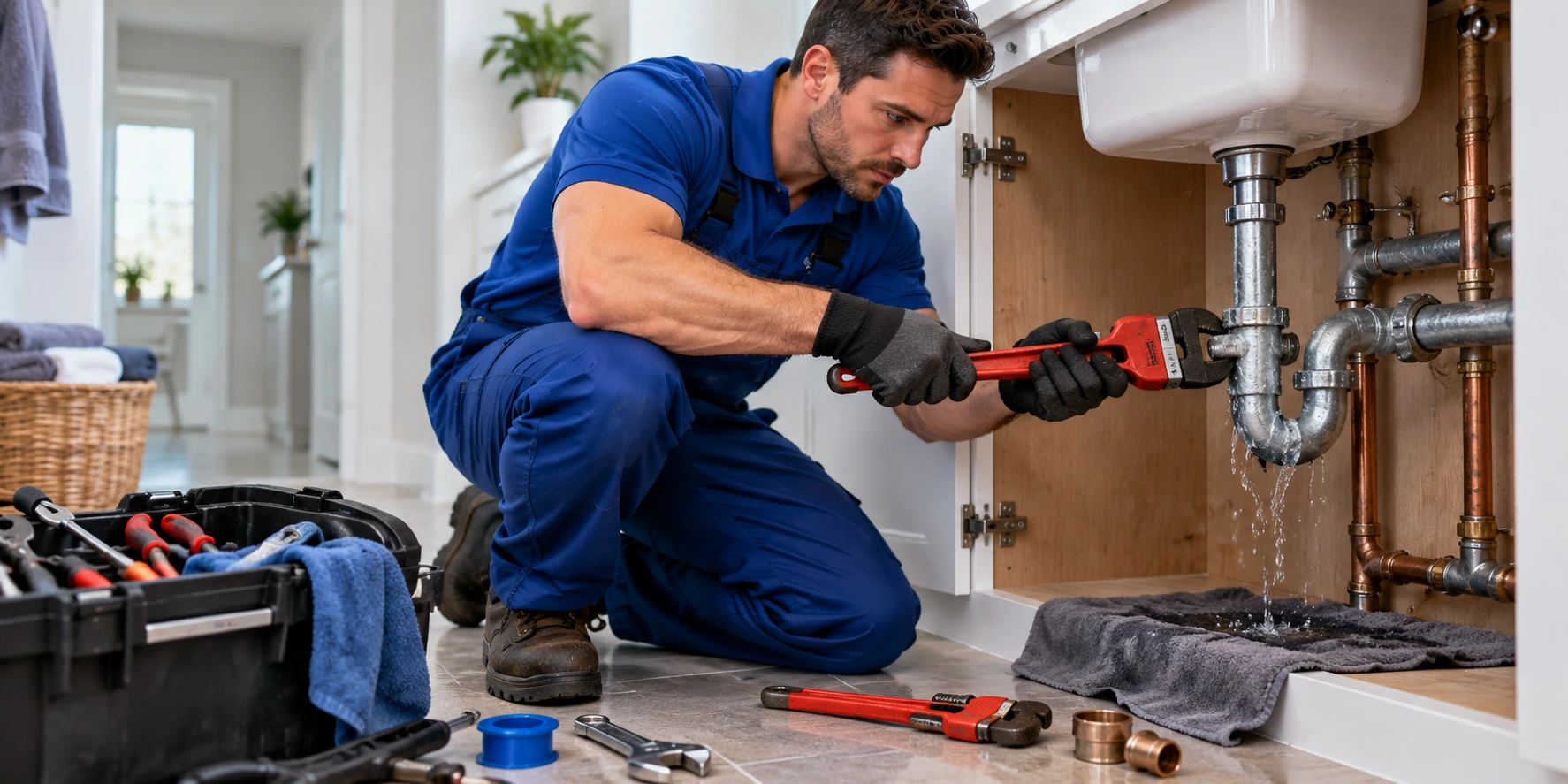
Pipe repair in Wylie for leaks, splits, and buried runs
When a supply line splits or a joint starts to weep, Wylie Pipe Pros handles pipe repair in Wylie, TX for houses, townhomes, and condos, and we run the same work in Lavon, Nevada, Josephine, and Caddo Mills. We start by reading pipe material, house pressure, and the buried run from the meter, because those three things decide whether a coupling will hold or the line has to come out. Homeowners also call us for drain cleaning, hot water heater repair, fixture installation, garbage disposal repair, and emergency plumbing when a line opens up at night.
In 75098 the mix is sharp from street to street. Woodbridge and the 2000s streets tend to carry copper, PVC, and PEX, while Historic Downtown still has galvanized steel and copper on cottages near Olde City Park. Hard city water leaves scale that narrows older copper, and that scale is often the first clue we chase on a low-flow complaint.
The leak gets isolated with the meter and the house valve before anyone opens drywall. We work 24/7, and we do not leave until static pressure, which is the reading with every fixture closed, holds and the rooms are wiped down. The sections below walk through that test order, the failures we see, and how we decide between a section repair and pulling the line.
Other Services
Contact Us Today!
(945) 325-5651
Open 24 Hours
Reliable plumbing solutions for homes and businesses throughout Wylie, TX.
Professional repairs and installations completed with care, attention, and lasting results.
Need urgent plumbing help? Call Wylie Pipe Pros for fast assistance with leaks, burst pipes, backups, and other plumbing emergencies.
What we test first on a pipe call
Pipe repair is not a random cut at the stain. Material, house pressure, and whether the buried run is holding all get read before a wall opens. The order matters because a yard leak and an in-wall leak can leave the same wet baseboard. Each test below rules one path out so the repair stays on the failed piece.
Meter movement with the house valve closed
The first reading is at the meter with every fixture off and the house shutoff closed. If the leak indicator still turns, water is leaving between the meter and that valve, so interior walls stay closed. If the indicator stops, the yard line is holding and the loss is inside the slab or in the walls. That reading is how we decide on main water line leak repair versus an interior opening.
Static pressure versus flowing pressure
Static pressure at a hose bib is then compared with flowing pressure at the farthest tub. A healthy static reading with a steep drop once water moves points to restriction inside the pipe, often scale in copper or galvanized pipes rusting from the inside. Low static and low flowing together can mean a crack that dumps volume before it reaches the fixtures. The pair of numbers rules out a clogged aerator, which only hurts one tap.
Material, joints, and remaining wall
Once the wet side of the valve is known, the pipe itself gets a close look. Copper gets a pass for pinholes and green staining at joints. Galvanized gets a cut coupon on a sacrificial nipple when we can, because remaining wall tells us if a coupling will thread without crumbling. PEX is checked at crimps, stubs, and manifold ports, and that material reading decides a local copper pipe repair versus opening a longer trunk.
Listening under the slab and in the wall
If the meter test cleared the yard and pressure still falls, the interior is zoned and we listen. A slab leak under the floor often sings through ceramic or sounds dull through carpet, and a thermal scan on the slab surface helps mark the path. In-wall leaks show as stains or as a hiss at an outlet or baseboard. Marks go on before any cut so the opening stays as small as the repair allows.
Pipe failures we see in Wylie houses
Most calls land in one of a few patterns: a burst, a quiet stain, a freeze split, a yard leak, weak flow, copper pinholes, a slab path, or a trunk that is past patching. The housing around town is mostly slab-on-grade, so water follows the floor and the trench as much as it follows a wall. Each pattern below is written the way it shows up in daily use, then the repair that actually holds.
Burst pipes
A burst dumps volume fast, and on a slab house that water finds the nearest low room. In Wylie the split is often on an exposed hose bib, an attic elbow, or a galvanized nipple that finally opened. The rest of the house can still be sound, which is why isolation comes before anyone assumes a whole trunk is gone.
Signs it is time to call
- Water spraying from a hose bib or an attic elbow
- A ceiling that sags while a bath is running
- The meter spinning with every tap closed
- A closet or garage wall that is suddenly wet
- Loss of all pressure after a pop in the line
- Mud at the slab edge after a loud snap
The house valve goes closed, a faucet opens to drop pressure, and the split is found by sight and by the meter. Burst pipe repair on a short copper or PEX run is a coupling or a new stub after the pipe is dried and cut square. If the burst is the third failure on a galvanized trunk, that trunk is the real conversation. Along State Highway 78 the older cottages still have those exposed bibs on north walls.
Leaking pipes in walls or ceilings
A slow leak behind paint soaks more wood than a burst that someone hears right away. To fix a leaking pipe in the wall, the meter still comes first, because a slab path can stain the same baseboard. Historic Downtown cottages with original copper and galvanized hide leaks in plaster that does not show until the stain is already large.
What you might notice first
- A bubbling or brown streak on a ceiling
- Paint that peels in a straight line
- A warm spot on an otherwise cool wall
- Soft drywall around a shower valve
- The sound of water when no fixture is on
- A downstairs stain that grows after an upstairs shower
The wettest point is marked, confirmed with a moisture meter, and opened on that mark. Copper pipe repair here is often a coupling on a pinhole, while galvanized may need a longer nipple because the threads are the weak point. The branch is capped and retested before close-up so the stain does not return behind new paint. Birmingham Farms houses from the 1990s and 2000s often show this on copper branches in hall walls.
Frozen pipe repair
Uninsulated hose bibs, garage walls, and attic runs in Wylie still split when a freeze settles overnight. Frozen pipe repair in winter is about finding every split, not just the one that is spraying, because ice can open two elbows on the same bib. Thawing is done with warm air, never with an open flame, while the meter is watched as the line comes back.
How this shows up in the house
- A hose bib that weeps after the thaw
- No water at a kitchen wall on the north side
- Ice on an attic elbow
- A burst at a garage 90-degree fitting
- Water in the ceiling after the first warmup
- Paint blown off a pipe chase in an exterior wall
Once flow returns, the split is cut out, a coupling or a PEX jumper goes in, and the run is insulated. If the pipe sits in an uninsulated exterior wall, a second split a few feet away is worth hunting. Frozen pipe repair stays a local job unless the thaw reveals a trunk that was already thin. Lakeside Estates and similar 1990s streets still have copper in attics with thin insulation at the eaves.
Repiping whole houses
Repeated leaks on the same trunk are how a house tells you the wall is gone. Repiping is the planned replacement of those trunks, usually with PEX, while water stays on to the rest of the house in stages. It is the right talk for galvanized downtown and for copper that has started a pinhole pattern, not for a single crimp on a 2010s manifold.
Clues in the rooms
- Brown water after any plumbing work
- Two or three leaks on the same hall line
- Low flow at the far bathroom only
- Visible rust flakes in aerators
- Shutoffs that crumble when turned
- A kitchen and a bath failing in the same week
Trunks are mapped, access points are opened, and one zone is pulled at a time so a toilet still works. PEX repiping of an older home lets us reroute around a slab that we do not want to saw, and galvanized pipe replacement is the usual downtown scope. Polybutylene replacement, when that gray plastic still shows at fittings, is a whole-run job rather than a single coupling. About eight percent of Wylie units were built before 1980, and those pockets are where this conversation still starts.
Water line repair on the run to the house
The yard line takes clay movement that interior pipe only feels at the slab edge. Main water line repair starts with the meter test, then a probe of wet soil between the box and the foundation. If the interior is dry and the parkway is wet, this is the job. Longer failures along that trench belong with water line replacement.
Yard clues that point to the buried line
- A meter that turns with the house valve closed
- A soggy strip from the box to the slab
- A sinkhole or a soft spot in the parkway
- Sudden drop in pressure at every fixture
- The sound of water in the yard at night
- Green grass over the trench in dry weather
The leak is confirmed on the buried run, then the failed section is exposed and neighboring pipe is checked for stretch marks from clay. A clean break at a fitting is water line repair with new pipe bedded so the next joint does not shear. Repeated wet spots along the trench are the cue to pull the line instead of stacking clamps. Sage Creek and Dominion of Pleasant Valley sit on the same expansive clay, so new streets are not immune.
Low water pressure from pipe problems
When every fixture feels weak, the cause is rarely one aerator. Low water pressure in the whole house from interior pipe shows up as a healthy meter reading and a sad flowing number at the tub. Scale, collapsed galvanized, and a partially closed valve all mimic each other until those two numbers are on paper.
What weak flow feels like
- Showers that fade when the washer fills
- Hot flow weaker than cold at every tap
- The far bathroom slower than the kitchen
- Aerators packed with white or brown flakes
- Indoor taps weak while the hose bib is strong
- The dishwasher that no longer fills on time
Static is measured, then flowing, then a sacrificial fitting is opened. Copper with scale may need a section replaced, and galvanized that has closed down needs that trunk pulled. If the meter side is weak, the city tap and the yard line are next, not the hall walls. Summer production for the region roughly doubles, and watering rules from April through October add irrigation load on the same street mains.
Pinhole leaks in copper
Pinholes start as a needle of water and stain a ceiling if nobody lifts the paint. Hard water, a thin wall, and a tiny defect work together, and one hole can still be a coupling. A line of holes on the same trunk is a different decision.
Early hints in daily use
- A green or blue stain on copper
- A drip from a pin-sized hole on a hall run
- Ceiling spots that return in the same place
- Moisture at a copper hanger
- The smell of wet drywall with no burst sound
- A dark line along a pipe chase
The pipe is dried, cut square, and closed with a coupling or a PEX jumper. If a second hole appears during the static test, the rest of that trunk gets a wipe-down, because pinholes cluster. Copper pipe repair stays local when the rest of the wall is sound, and clamps are not stacked down a thinning hall line. Woodbridge copper from the 2000s is still in the pinhole years on some hot branches.
Slab leaks
Water that never shows at a wall can still cut a channel under the living room. Slab leak repair starts only after the yard side of the valve has been cleared. Listening and a surface scan come next so the saw cut sits on the leak, not on a guess across the room.
What the slab is telling you
- A warm stripe across a tile floor in cool weather
- A soft spot in carpet with no upstairs leak
- A bill that jumped while every faucet stays dry
- A hiss under the floor when the house is quiet
- Cracked grout over a known supply path
- Damp baseboards with dry walls above them
Zones are isolated, the path is confirmed by sound, and the smallest window that lets us cut out the failed copper is opened. If the rest of the loop is sound, a section repair under that room can hold. If clay has pinched the line in more than one place, the line is rerouted. When the path is unclear, leak detection is the right next step before anyone saws tile, and Kreymer Estates and Bozman Farm Estates more often show a fitting under the floor than aged copper.
Safe checks before a pipe repair visit
A few quiet checks help us arrive already knowing which side of the house is wet. None of them require a tool beyond the house valve and a look at the meter. Skip anything that means opening a wall, lighting a torch, or cutting the slab. If the only drip is at a faucet body, fixture installation is a better fit than opening a wall.
What you can check safely
- Close the house shutoff and leave it closed if water is dumping
- Open a faucet after the valve is closed so pressure drops
- Watch the meter with every fixture off for several quiet minutes
- Note which rooms are wet and whether the yard is wet too
- Photograph the stain without cutting drywall or tile
What you should leave alone
- Do not use a torch or a heat gun on a frozen pipe
- Do not tighten a blistered galvanized fitting
- Do not cut the slab to hunt a sound
- Do not set a bucket on a live outlet under a drip
- Do not pour stop-leak pellets into the heater or the main
Section repair versus pulling the line
The choice that matters on this call is whether a section repair will hold or the line has to come out. We do not read that from a stain alone. After the meter isolation and the static-to-flowing pair, failures on one trunk are counted and remaining wall is checked. One wet joint on sound pipe is a coupling job. A thinning trunk with a second leak during the retest is a pull.
When a coupling is enough
A coupling is enough when the rest of that run still has wall and the leak is local. On a copper house from the 2000s, a single pinhole on a branch can take a coupling and a short PEX jumper, then a static retest. If that gauge holds and no second hole appears, the wall can close. PEX crimp leaks in a 2010s manifold get the same treatment: replace the fitting, check the other ports, and leave the rest of the plastic in place.
Freeze splits on a hose bib or an attic elbow are also local when the trunk behind them is sound. Inside the yard, a clean break at one fitting can be a short water line repair with fresh pipe bedded so clay movement does not shear the same joint twice. Neighboring pipe is checked for stretch marks before that is called a section job. If the rest of the trench is dry and the interior meter test is quiet after the repair, the short piece stays.
When the trunk has to come out
The trunk has to come out when failures cluster or the wall is gone. Historic Downtown galvanized that throws brown water after any disturbance, or that crumbles next to a new thread, is past a coupling. Copper with clustered pinhole leaks in copper pipes on the same hall line is the same story. Flowing pressure that collapses at the far tub while static at the hose bib still looks fine means the interior is restricted, and patches will not open a closed galvanized bore. That is when a house needs a full repipe, usually in PEX, done by zone so part of the house keeps water.
On a slab, one joint we can reach through a small opening can still be a section repair. Two pinch points from clay heave mean we reroute rather than saw a third room. A yard line that has already been clamped, or that shows multiple wet spots between the meter and the house, should come out rather than take another clamp. The coupon, the pinhole cluster, or the wet trench is what we show so the choice is tied to the pipe in front of us.
Why homeowners pick us for pipe work
The work is judged by whether the repair holds pressure and whether the opening was on the right path. Calls along FM 544 get the same meter-first order as calls on Kristen Ct. Weekday arrivals often include same-day diagnosis, and the night crew still runs the meter test first.
Isolation before any drywall cut
Cutting a wall to hunt a leak is how stains get bigger. Yard versus interior is proven at the meter, then the wet point is marked. That habit comes from seeing open halls that were dry on the inside because the real loss was in the trench.
What the truck carries from Kristen Ct
The shop sits on Kristen Ct, and the truck carries isolation valves, press-fit and threaded couplings, PEX heads, a thermal camera, and listening gear. Those tools let a section repair finish without a second trip for a fitting. If a trunk has to come out, manifold parts are already on the truck to start a zone.
How the rooms look when we leave
The water stays on unless a special joint still needs cure time, which is rare on press and PEX. Floors get wiped, scraps go out, and the static test is done with the gauge where you can see it. If a hall was opened, the hole stays as small as the coupling allowed.
Night and weekend dispatch
Pipe failures do not wait for morning. Night calls in Wylie still start at the meter, and we are available 24/7. The goal is a holding repair and a clean floor, not a lecture at the door.
How clay and winter treat a Wylie supply line
Houston Black clay heaves when it is wet and shrinks when it dries, and that motion shears slab plumbing and the buried run from the meter. Hard city water adds scale that hides pinholes in copper until the pipe flexes. Freeze bursts still hit uninsulated hose bibs, exterior walls, and attic runs when a cold night settles in. Those three stresses are why the yard, the slab, and the exposed pipe are tested as separate paths instead of cutting the first stain we see.
Lavon
Pipe repair in Lavon still starts at the meter even on new PEX, because most houses there are billed by Bear Creek Special Utility District, not by City of Wylie. New slabs along SH 205 still rest on shrink-swell clay, so the yard line and the slab loop can shear while the walls look brand new. A first-year fitting leak and a trench leak do not get the same opening.
Nevada
Nevada is also in Collin County, and the seller there is Nevada Special Utility District. Older rural houses on larger lots along FM 1138 still carry galvanized or copper, while newer subdivision streets have PEX. Section repairs on the older lots fail when the remaining galvanized wall cannot hold a thread, so the visit is built around a trunk decision, not only a coupling.
Josephine
Josephine has a Hunt County edge, and the city buys treated water from the North Texas Municipal Water District. Housing is very new slab homes, so construction debris in lines and first-year fitting leaks show up more than aged pinholes. FM 547 feeds those streets, and the repair is usually a crimp or a stub unless clay has already marked the yard line.
Caddo Mills
Caddo Mills is in Hunt County, not Collin, and homes there are billed by the City of Caddo Mills. Main Street still has older galvanized and copper, while the 2010s streets are PEX on slab. A leak on FM 36 is treated as a material question first, then a soil question, because a new PEX fitting leak and an old galvanized trunk leak do not get the same repair.
Questions about leaks inside the house
Why does a pipe in the wall leak after years with no trouble?
Copper in Wylie carries hard city water that thins the pipe from the inside. A pinhole can sit closed by scale, then open when pressure spikes or the slab flexes. Galvanized rusts from the inside until a thread weeps. We confirm with meter isolation first so the wet wall is the real leak, not a slab path at the baseboard. Then we open on the mark.
Do I need a plumber for a leaking ceiling if the stain is dry now?
A dry stain still means water already traveled through the ceiling finish. The leak may have slowed because a shower stopped or a pinhole crusted over. If the upstairs floor feels soft, or if the stain grows after the next bath, the pipe is still open. Calling a plumber for a leaking ceiling makes sense even when the drip has paused, because the wood stays wet longer than the paint looks.
What causes banging pipes in the walls on a Wylie slab home?
Banging pipes in the walls often mean a loose strap, a quick-closing valve, or a section that rattles as flow hits a restriction. On slab-on-grade houses the supply is short and rigid, so water hammer has nowhere to go. We listen with the system running and we look for collapsing galvanized or a PEX line that has slipped a clip. If the bang lines up with a wet spot, we treat it as a leak path.
Who handles pipe repair near me in Wylie after hours?
We take after-hours pipe repair in Wylie, Lavon, Nevada, Josephine, and Caddo Mills, and the night visit still starts at the meter. If water is dumping, the house valve goes closed and a faucet goes open so the split is not under pressure. We isolate yard from interior, repair the failed piece, and watch static pressure before we leave. Rooms get wiped down even on a late call.
Questions about buried lines and repipes
How do you tell a yard leak from a slab leak under the floor?
When we need to tell a yard leak from a slab leak under the floor, we close the house shutoff and watch the meter. Movement with the valve closed means water is leaving in the trench. A quiet meter with interior pressure still falling puts the loss inside, and then we listen at the slab. A warm stripe or a jumped bill with dry fixtures points under the floor, while yard leaks wet the parkway.
When does an older home need a full repipe instead of patches?
Repiping an older home makes sense when galvanized paints the water brown after any work, when copper shows clustered pinholes, or when flowing pressure at the far bath collapses while static at the hose bib looks fine. One coupling on a kitchen branch is still a repair. Three leaks on the same hall trunk mean the wall is gone. We show the coupon or the pinhole cluster so the choice follows the pipe.
Can hard city water cause low water pressure in the whole house?
Hard city water can cause low water pressure in the whole house when scale narrows copper fittings and heater nipples. The mineral builds at elbows and at the hot water heater first, then in small branches. We compare static and flowing numbers and we check street pressure at the meter so we do not open walls for a utility sag. If the meter side is strong and the far tub is weak, the restriction is in the house pipe.
Should I shut off the house if my water bill went up with no leak visible?
If the water bill went up with no leak visible, close the house valve and watch the meter for ten quiet minutes. Continued movement means the trench line or a slab path is wasting water with every tap off. Leave the valve closed and note which rooms felt damp. Do not start cutting tile to hunt it. We bring listening gear and a pressure test so the opening stays on the actual path.
Pipe repair in Wylie is a materials job, a pressure job, and a decision about whether one section will hold. Wylie Pipe Pros handles the yard line, the slab loop, in-wall copper and galvanized, freeze splits, and the whole-house call when patches have stacked up. If the path under the floor is unclear, leak detection should come before a saw, and if the trench line is failed in more than one spot, water line replacement is the cleaner path. When water is dumping now, emergency plumbing is the right first call, and the plumbing services list covers drains, heaters, and fixtures that these lines feed. For a wider look at residential work, start at our Wylie plumber home.
Reach out to us for assistance.
ZIPs we cover: 75098, 75166, 75173, 75135