
Fixture Install
At Wylie Pipe Pros, we provide high-quality plumbing fixture installation and repair throughout Wylie. From faucets and sinks to toilets, tubs, and showers, we help homeowners upgrade worn fixtures, improve functionality, and give kitchens and bathrooms a fresh, finished look.
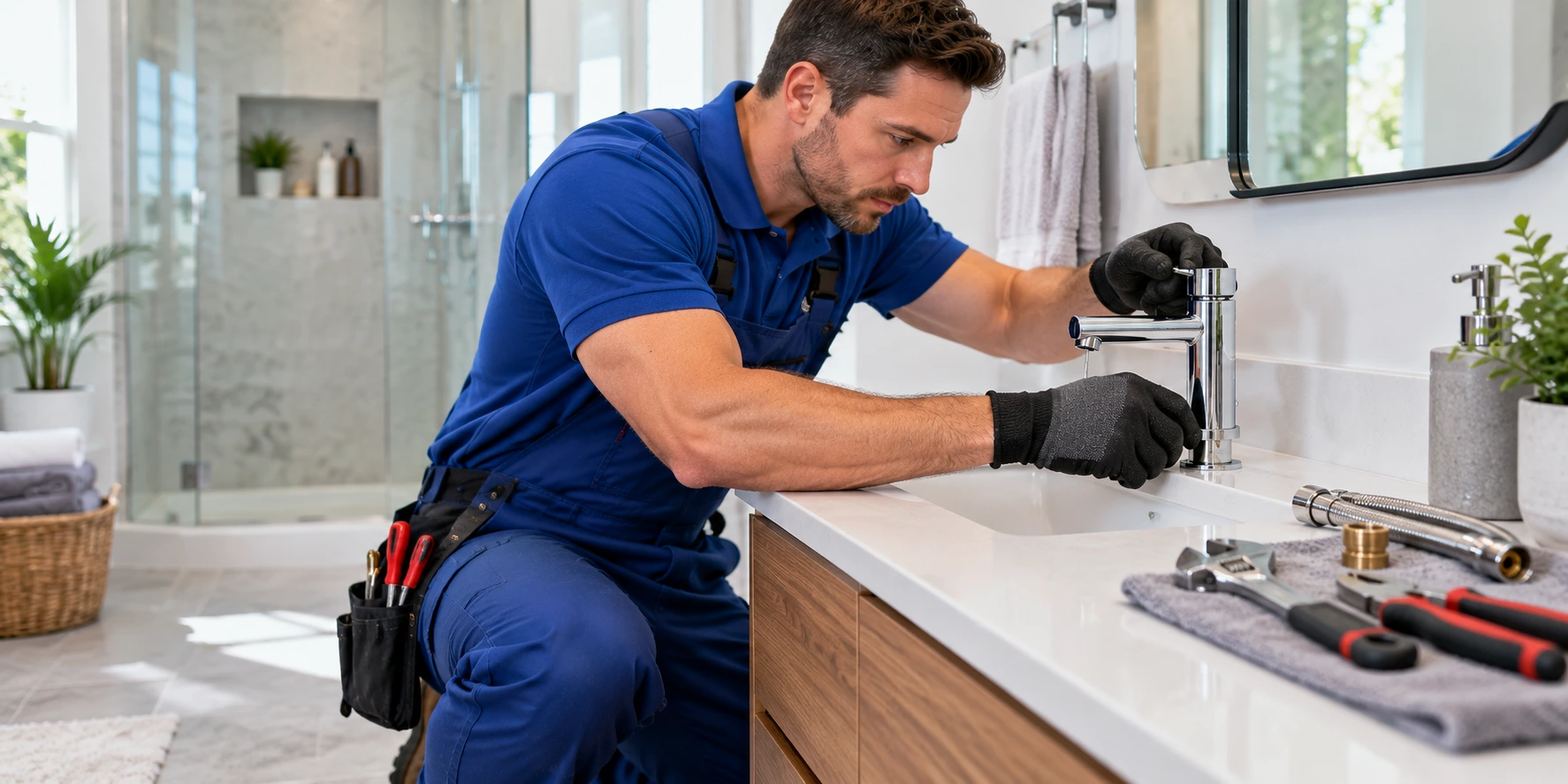
Fixture installation in Wylie, TX for kitchens and baths
When a faucet, toilet, or shower trim fails, we treat the last section of supply behind it as part of the job, not an afterthought. Wylie Pipe Pros does fixture installation in Wylie, TX for homeowners in houses, townhomes, and condos, and we run the same work in Lavon, Nevada, Josephine, and Caddo Mills.
A dripping cartridge, a rocking bowl, a shower valve that will not mix, sink installation, kitchen faucet replacement, toilet installation, and the line work those jobs uncover are the calls we take on a typical day. In Historic Downtown the older cottages still hide galvanized nipples behind the trim, while Woodbridge houses from the 2000s boom usually feed bathrooms with copper or PEX.
We test pressure and the stub-out before we cut a wall or pull a bowl, and we bag the room so the floor stays clean. Work in 75098 runs 24/7, including nights when a faucet dripping all night keeps you up. Once we know whether the fixture, the stop, or the feed is the weak point, the rest of the visit follows that reading.
Other Services
Contact Us Today!
(945) 325-5651
Open 24 Hours
Reliable plumbing solutions for homes and businesses throughout Wylie, TX.
Professional repairs and installations completed with care, attention, and lasting results.
Need urgent plumbing help? Call Wylie Pipe Pros for fast assistance with leaks, burst pipes, backups, and other plumbing emergencies.
What we test first on a fixture call
We do not hang trim until the feed behind it has a number and the stop actually closes. Static pressure tells us whether a cartridge can live here. Closing the stop tells us whether we can isolate the body. Looking at the nipple tells us whether threads will hold a new supply. That order matters because a new faucet on a scaled, high-pressure stub fails in weeks, and a toilet set on a low flange stains the floor by morning.
House pressure at the fixture
We put a gauge on the stop or on a nearby hose bib and read static pressure with no fixtures open. A high reading rules out a starved line and points at cartridge wear, especially in summer when irrigation load on the buried run makes some houses run hotter at the tap than the seals like. A low reading rules out a simple drip and points us at scale inside the last few inches of pipe, a stop that is barely open, or a pinched stub. Hard city water near eight to nine grains leaves mineral right there, so the gauge is not a guess about the whole street.
Stops, nipples, and the last supply
Next we open and close each fixture stop and watch whether the packing weeps. A stop that will not turn off means we cannot pull a faucet without flooding the cabinet, so shutoff valve replacement comes before any faucet installation. Then we back the supply off and look at the nipple. On older Wylie cottages that nipple is often still galvanized, and a new braided hose on rusted threads weeps at the union even when the cartridge is perfect. Clean copper or PEX with sound threads can take the new fixture. Thin steel gets rethreaded or replaced so the last section of supply matches the trim we are about to set.
Flanges, tanks, and mixing valves
For a toilet we check rock, base moisture, and flange height against the finished floor before anyone lifts the bowl. A flange set flush under a later tile layer will not hold a wax ring on a slab-on-grade house, which is a Wylie pattern after remodels. Dye in the tank shows a running toilet that is only a flapper. For a shower we run hot and cold through the valve body, not just the handle trim, because a pressure-balance cartridge that sticks will scald even after you swap the pretty plate. Those three checks decide whether this is fixture work or wall work.
Fixture problems we see in Wylie homes
Most fixture calls in Wylie start as a drip, a rock, a temperature swing, or a stop that will not move. The housing splits the job. Pre-1980 cottages still carry steel nipples and tired flanges. Streets from the 1990s into the 2000s, including Birmingham Farms, usually have copper stubs and builder cartridges. Newer PEX homes fail at punch-list valves that were never opened through their full travel. The sections below are the failures we actually open.
Dripping faucets and worn cartridges
A drip that hits the sink all night stains the chrome and keeps the trap wet, and in this housing the usual cause is a cartridge whose discs no longer seat. Builder faucets from the 1990s and 2000s sit on copper stubs, and mineral scores those discs until one handle weeps. Living with it wastes water and rusts the stop you will need later, which turns a small faucet repair into a cabinet flood.
Signs it is time to call
- The spout beads water after you shut both handles
- One handle has to travel farther than it used to
- You hear the drip on the metal drain at night
- The shutoff under the sink is damp at the packing
- The hot side drips even when the handle is down
- White crust forms at the aerator
- The drip speeds up after someone showers
- Chrome at the spout base shows a green trail
We shut the fixture stop and read whether it actually holds, because a cartridge swap is pointless if the stop cannot isolate the body. Then we pull the handle and see whether the cartridge is glazed or the seat is pitted. Clean copper and a true seat get a cartridge or a full faucet installation. A rusted galvanized nipple gets threads cleaned or the nipple replaced so the new body does not weep at the union. Near Olde City Park at State Highway 78 and Ballard Avenue, those steel nipples are still common behind the trim.
Toilets that rock, run, or leak at the base
A bowl that moves when you sit is not a loose bolt job for long, because the wax then opens and the base stays wet. Slab houses in Wylie see that when the flange sits too low after a later floor, or when the closet bolts have pulled through a tired horn. A running toilet that refills every few minutes is a different path, and dye in the tank tells us whether the flapper is the whole story before we talk about a new bowl.
What you might notice first
- The bowl shifts when you sit or stand
- The base is damp or the vinyl is stained
- You smell sewer at the floor, not in the bowl
- The tank refills on its own every few minutes
- You have to jiggle the handle to make it stop
- Water seeps at the supply on the tank bottom
- The closet bolt caps sit in rust
- The floor feels soft beside the bowl
We measure flange height against the finished floor, because a ring that sits flush will not seal a modern bowl. If the flange is sound we can install a new toilet on an old flange with a new wax and true bolts. If the flange is rotten and the waste is still round, we replace the flange on the same horn. A toilet that rocks on the floor after a set means the height was wrong, so we do not leave that reading for later. Slow drainage after a set is a waste issue, and that belongs with drain cleaning rather than another bowl.
Shower valves that will not mix or hold temperature
Temperature that jumps when a toilet fills is the pressure-balance cartridge telling you it is stuck, not the handle trim going out of style. Families notice it first as a scald on one body and a cold blast on the next. In Wylie, valves set in exterior walls also take freeze stress, so shower repair is often the valve body, not the pretty plate you can buy in a box.
How this shows up in the house
- Hot and cold swing when another fixture opens
- The handle must sit in a tiny sweet spot to mix
- Only one side of the valve still moves water
- The trim plate is wet or the plaster below it stains
- The shower never gets as hot as the sink
- You hear chatter in the wall when the valve opens
- The cartridge grinds when you turn the handle
- Water tracks down the tile from the escutcheon
We run the valve with the trim off so we can see whether the cartridge still meters both ports. A plumber to install a new shower should still open the stop and gauge pressure first, because high pressure beats a new cartridge the same way it beat the old one. When the body is cracked or the wall is wet, we replace a shower valve behind the wall through a small opening and patch after the mix is true. If there is no hot at any fixture, that is hot water heater work, not a shower valve replacement.
Supply stops that will not close
The small oval handle under a sink is the only isolation some rooms have, and when it has not moved in a decade the stem seizes. Homeowners find out during a drip, when the stop will not kill the faucet. Forcing it shears the stem and leaves the cabinet full of water, which is why we treat a frozen stop as the first problem, not a footnote to the trim.
Clues at the stop and riser
- The oval handle will not turn even with light force
- Water still runs after you shut the stop
- The packing nut weeps when you touch the handle
- The chrome body is crusted white or green
- The supply line is stiff and stained at the ferrule
- You have to shut the whole house to change a faucet
- The stop spins without changing the flow
- The riser drips at the compression ring
We isolate upstream when we can, then cut the old compression ring instead of cranking it. A shutoff valve replacement with a quarter-turn stop gives the room a valve that actually closes, which is the only way a later faucet installation stays dry. On scaled copper we also look at the nipple threads, because a new stop on a thin thread still leaks. If the leak is not at the stop but in the wall or under the slab, leak detection comes before any trim kit.
Sink and vanity installations
A vanity that is coming out is a chance to see the last section of supply and the trap in good light, which older Wylie baths rarely offer with the cabinet in place. Setting a new sink on tired stops just hides the next leak. We also watch the drain height and the supply centers, because a bowl that sits forward of the old stub will kink a hose and drip in a week.
What usually shows around a vanity
- The cabinet floor is swollen or stained
- The bathroom sink faucet leaking under the cabinet drips on storage
- The trap has been glued in a strange loop
- The new bowl does not line up with the old holes
- Both stops are frozen at the same time
- The overflow on the bowl weeps when you fill it
- The pop-up rod no longer seats the drain
- You see mineral trails on the cabinet back wall
Sink installation in these houses is stop work, supply work, and bowl work in that order. We set new quarter-turn stops, new supplies, and then the faucet so a leak has nowhere to hide. If the drain is slow after the set, we camera or cable before we blame the new pop-up. Bathroom fixtures look finished when the cabinet is dry after a twenty-minute run of both hot and cold, and that is the check we leave on.
Kitchen faucet replacement
A kitchen spout that sprays sideways or drips into the basin all afternoon is the call that usually wants a same-day swap, and we can do kitchen faucet replacement the same day when the stops close and the hole in the deck is true. Many Wylie kitchens from the copper years still have a thin deck and a sprayer line that has already stained the cabinet. West toward FM 544, that pattern shows up in Lakeside Estates and Birmingham Farms on copper stubs that also pinhole at the last fitting.
Warnings at the kitchen sink
- The spout drips after both handles are down
- The sprayer stays stuck or leaks at the coupling
- The faucet body rocks on the sink deck
- A new fixture leaks at the supply line after a weekend swap
- Hot water at the kitchen is weaker than at the bath
- The light in the cabinet shows a wet plywood floor
- The handle loosens every few days
- The aerator clogs again right after you clean it
We pull the old body, inspect the deck hole, and replace supplies rather than reuse ferrules that have already bitten the copper. If the stub itself is pinholed, pipe repair on that last copper run comes first, or the new faucet weeps behind the new escutcheon. A dead disposal is a separate job from the faucet, and that is garbage disposal repair. Scale that clogs the kitchen aerator every month is the same hard water that etches cartridges, so we mention it when we hand the house back.
What to check before we get there
A few safe looks help us bring the right stops and supplies, and they keep a small drip from becoming a cabinet full of water. None of these steps require tools beyond a flashlight. If anything feels stuck, stop and wait. Frozen chrome does not forgive a wrench.
Safe checks you can make
- See whether the drip is hot, cold, or both
- Look under the cabinet with a dry paper towel to mark a fresh drip
- Try the fixture stop with two fingers only, no wrench
- Lift the toilet tank lid and watch whether the flapper seats
- Note whether the bowl rocks before anyone sits again
What not to do while you wait
- Do not force a seized stop with pliers
- Do not pull a toilet with the water still open
- Do not open the shower wall looking for the valve
- Do not reuse an old compression ring on a new supply
- Do not keep using a shower that scalds when another fixture opens
Write down the fixture brand if it is still readable on the body, and keep people off a rocking bowl. Those notes shorten the visit without turning the room into a project before we arrive.
Repair the fixture, replace it, or fix the line
Every fixture job in Wylie turns on one choice. Repair the cartridge or flapper, replace the whole fixture, or open the last section of supply because the trim is not the failure. Older piping and new-build punch-list trim fail in different ways, but the test order is the same. We would rather say the line is the job than hang bathroom fixtures on a feed that will stain the cabinet next week.
When a repair on the fixture is enough
A dripping faucet with sound nipples, a true seat, and normal pressure is a cartridge or a flapper, not a remodel. We replace the worn part, cycle the stop, and watch the spout or the bowl for a full fill-and-rest. That path fits many Woodbridge and Kreymer Estates baths where PEX or copper is still round and the trim is just tired. It also fits a running toilet whose flange height is already correct and whose base is dry.
Repair holds when the last section of supply is clean enough to take a new seal. If the nipple is steel and thin, we do not call a cartridge the finish. If the flange is low, we do not call a new flapper the finish. Those two exceptions are how a cheap-feeling drip becomes a real leak, and we stay on the side of the reading.
When the fixture should come out
Replace the fixture when the body is cracked, the deck is rotten, the handle no longer meters, or the bowl is stained at a base leak that has already softened the floor. Kitchen faucet replacement on a rocking deck is in this group, because a new cartridge cannot stiffen a thin sink. Toilet installation is in this group when the tank weeps at a cracked ear or the bowl horn is chipped.
New fixtures on older piping still need the nipple and stop work first, or the new body inherits the old drip. Punch-list trim on newer builds can look brand new and still hide a valve that never mixed, so we do not treat shine as proof. Much of the housing in Wylie went up in the 2000s, which means a lot of builder cartridges are simply at the end of their travel, and a whole fixture is cleaner than stacking parts on a worn body.
When the line behind it is the real job
Fix the line when pressure is wrong, the stub is pinholed, the galvanized nipple will not take a thread, or the wet is in the wall or the slab rather than at the trim. A pressure complaint at a shower is often the feed, not the handle. Pinholes in aging copper show up first at the last fitting, which is why we pull the supply instead of guessing from the spout. If the failure is the buried run from the meter to the house, that is water line replacement, and another faucet will not change it.
Slab movement on expansive clay can shear a flange or rack a shower valve in the wall, and that is line and waste work even if the homeowner asked for trim. We explain that with the gauge reading and the wet pattern, then we set only what will hold. Mixing a fixture swap with a failing feed is how a one-hour visit turns into a callback, and we would rather split the job on purpose.
How a fixture visit runs from call to close
Reaching out with the fixture and the room
Tell us which room, whether the drip is hot or cold, and whether the stop still moves. A photo of the under-sink tangle helps us load quarter-turn stops and the right supply length. Wylie Pipe Pros trucks leave 101 Kristen Ct with gauges, wax rings, extra stops, and common cartridges so a straightforward set does not wait on a parts run. If the house is flooding, say that first so we treat it as an isolation job.
Scheduling the visit and protecting the room
We pick a window, then drop cloths and bag the cabinet or the bath floor before tools come out. Availability is 24/7, including nights when a toilet base is spreading across vinyl. Same-day diagnosis happens on that first visit when the stops and the flange cooperate, and we still leave the room dry if the line work has to wait. Kids and pets stay out of the workspace while the water is open.
Testing and explaining what the readings mean
Pressure, stops, nipples, and flange height get numbers before we commit to a part. We show you the seized stop or the low flange instead of talking past it. If the fixture is the job, we say so in one pass. If plumbing services beyond trim are required, we name that work and why the new cartridge would not survive it. You should hear the order we will follow before a saw touches a supply.
Setting the fixture and checking the house
We set stops, supplies, and trim, then run hot and cold long enough to prove the joints. A toilet gets a sit test and a dye rest. A shower gets a mix test with another fixture open. We wipe the cabinet, haul debris, and leave the shutoffs labeled so the next drip is easy to kill. If a joint weeps, we redo that joint before we pack up, not after a callback.
Fixture work in the towns around Wylie
Houston Black clay heaves when it is wet and shrinks when it is dry, and that movement racks a toilet flange on a slab and twists a shower valve in the wall. Hard city water scales cartridges and mixing valves, so a dripping faucet is often mineral on the seat, not a loose handle. Freeze bursts in uninsulated exterior walls kill shower valves and exposed stops even when the rest of the house stays warm. Those three loads are why we test the last section of supply instead of swapping trim first.
Lavon
Lavon sits in Collin County, and most homes there are billed by Bear Creek Special Utility District, not by City of Wylie. New streets such as Lakepointe and Elevon are slab houses with PEX and builder shower valves, so punch-list trim can hide a valve that never mixed. When we set bathroom fixtures in Lavon, we still gauge pressure and open the stop before the trim goes on.
Nevada
Nevada is also in Collin County, but water comes from Nevada Special Utility District. Older rural houses on larger lots still show tired stops and copper that pinholes at the last stub, while newer subdivision streets take PEX. Along FM 6 and FM 1138 we see both, so a faucet installation in Nevada can mean a nipple replacement on one lot and a clean PEX connection on the next.
Josephine
Josephine buys treated wholesale water through the City of Josephine, and the housing is very new slab homes. A punch-list shower or toilet that leaks is often a valve that was never opened through its full travel, not a failed bowl. We still check flange height on those new slabs because a rocking bowl will not wait a season to stain the grout, and FM 6 and FM 547 carry most of the streets we visit in Josephine.
Caddo Mills
Caddo Mills sits in Hunt County, not Collin County, and the city runs its own municipal water. Main Street still has older cottages where a toilet installation may sit on a cast flange, while the 2010s and 2020s streets take PEX and PVC. Along FM 36 we treat those as two different fixture jobs even though they share a town, which is how we work in Caddo Mills.
When the fixture is not the job
When the wet is not at the trim, leak detection finds whether a slab line is the real source before we hang new bathroom fixtures. Pinholes in the copper stub belong on pipe repair work, not under a new faucet. If the failure is the buried run from the meter, water line replacement is the honest job instead of another trim kit.
Questions on faucets, stops, and valves
Why does a faucet keep dripping after a cartridge swap in an older Wylie house?
Older Wylie cottages often feed a faucet through a galvanized nipple that has rusted from the inside. A new cartridge can seat for a day, then the drip returns because rust sits on the seat or house pressure holds the stem off the seal. We gauge that pressure, shut the stop, and look at the nipple before we blame the cartridge. If the nipple is thin, we replace that last section of supply and then set the cartridge or the whole faucet.
What should I do when a bathroom sink faucet is leaking under the cabinet?
Look under the cabinet with a flashlight and see whether the drip is at the supply line, the stop packing, or the drain. If the shutoff valve will not turn off, leave it alone and do not force the oval handle, because a snapped stop floods the cabinet. We isolate at a better valve, replace the stop if it is seized, and then set the faucet so the leak under the cabinet actually stops. Dry the cabinet floor so we can see a fresh drip when we test.
Can you replace a shower valve behind the wall without remodeling the bath?
A shower valve replacement usually means a small opening at the valve body, not a full gut of the tile wall. We confirm mixing at the cartridge first, because a failing pressure-balance unit can look like a bad trim kit. If the body is cracked or the plaster around it is wet, we open enough to replace the valve behind the wall and then patch. Homes with valves in exterior walls also get a freeze check on the pipe in the cavity.
Who handles fixture installation near me in Wylie after hours?
We take fixture calls at night and on weekends, and we are available 24/7 for a house that is flooding at a stop or a toilet. The first visit still starts with pressure, the stops, and the last section of supply, even after hours, because hanging trim in the dark without those readings just repeats the leak. If the fixture can be isolated, we set it then. If the line behind it is the failure, we make the house safe and plan the line work.
Why will a shutoff valve not turn off at a vanity?
A stop that has not moved in years often seizes at the stem, especially on older chrome stops in Wylie vanities. Forcing it shears the stem and leaves you with no isolation at the fixture. We isolate upstream when we can, then replace the seized stop with a new quarter-turn valve that actually closes. After that, faucet work is safe because we can kill water at the fixture instead of at the whole house.
Questions on toilets and new fixture sets
My toilet keeps running. What should I check before replacement?
A running toilet is often a flapper, a fill valve, or a tank that is out of level, not a cracked bowl. Dye in the tank shows whether water is slipping into the bowl. Shut the stop and see whether that stop even works before anyone pulls the bowl. A bowl that rocks, a wet base, or a flange below the finished floor means the wax and the flange are the repair, and sometimes a full toilet installation is the cleaner path.
Can you install a new toilet on an old flange in a downtown cottage?
Yes, we install a new toilet on an old flange when the ring is sound, the height is right, and the slab has not sheared the horn. Downtown Wylie cottages from before 1980 often have flanges that sit low after a later floor, and a rocking bowl will not hold a wax ring. We measure height, replace a rotten flange if the waste is true, and then set the bowl. If the waste itself is broken, that is a different repair than a toilet set.
Why does a new fixture leak at the supply line after we set it?
A new fixture leaks at the supply line when the old ferrule is reused, the nipple threads are thin, or the stop was never meant to take a modern hose. We cut the old compression ring, inspect the nipple, and use a new stop or a new supply rather than cranking a leak until the thread strips. On scaled copper in Wylie, that extra minute is what keeps the cabinet dry after kitchen faucet replacement.
Do new Josephine houses still need fixture work at punch list?
A very new slab home can still hide a shower valve that was never opened through its range, or a stop that was painted in place. We run the same pressure and stop tests we run in Wylie, then we set or replace the trim. Punch-list bathroom fixtures fail at the valve more often than at the bowl, which is why we treat a new street the same way we treat an older cottage at the last section of supply.
Fixture installation in Wylie is faucet work, toilet work, shower valves, stops, and the last stretch of pipe those pieces sit on. Wylie Pipe Pros handles houses, townhomes, and condos, and we carry the same tests into the nearby towns. Start with our Wylie plumbing company overview if you need a whole-house visit rather than a single fixture, then come back to the stops and the flange when the problem is in one room. We leave the cabinet dry, the bowl still, and the mix true, and we are here when the drip starts again at night.
Reach out to us for assistance.
ZIPs we cover: 75098, 75166, 75173, 75135